
You spent thousands on those gorgeous stone counters. Now they're looking dull, stained, or worse.
Here's what bugs me: most homeowners destroying their kitchen countertops in Winnipeg have no idea they're doing it. We've been fabricating and installing counters for two decades. The damage we see? Almost always preventable.
Today, we're talking about the five biggest mistakes people make with stone maintenance. Not the obvious stuff like dropping cast-iron pans. We are talking about the everyday habits that slowly ruin beautiful counters.
Ready to stop accidentally destroying your investment? Let's go.
Mistake #1: Using the Wrong Cleaning Products
Walk into most kitchens and you'll find the culprit sitting right by the sink.
That generic all-purpose cleaner? It's killing your stone.
Most household cleaners are way too harsh for natural stone. They contain acids, ammonia, or bleach. These chemicals eat away at the sealant protecting your counters.
Here's what happens over time:
Sealant breaks down faster
Stone becomes more porous
Stains penetrate deeper
Surface loses its shine
You end up needing expensive restoration
According to the Natural Stone Institute, acidic cleaners can etch marble and limestone in as little as 30 seconds of contact. Granite handles it better, but still suffers damage over months of use.
Winnipeg homes are completely ruined by vinegar-based cleaners. The homeowners thought they were being "natural" and eco-friendly.
What Actually Works
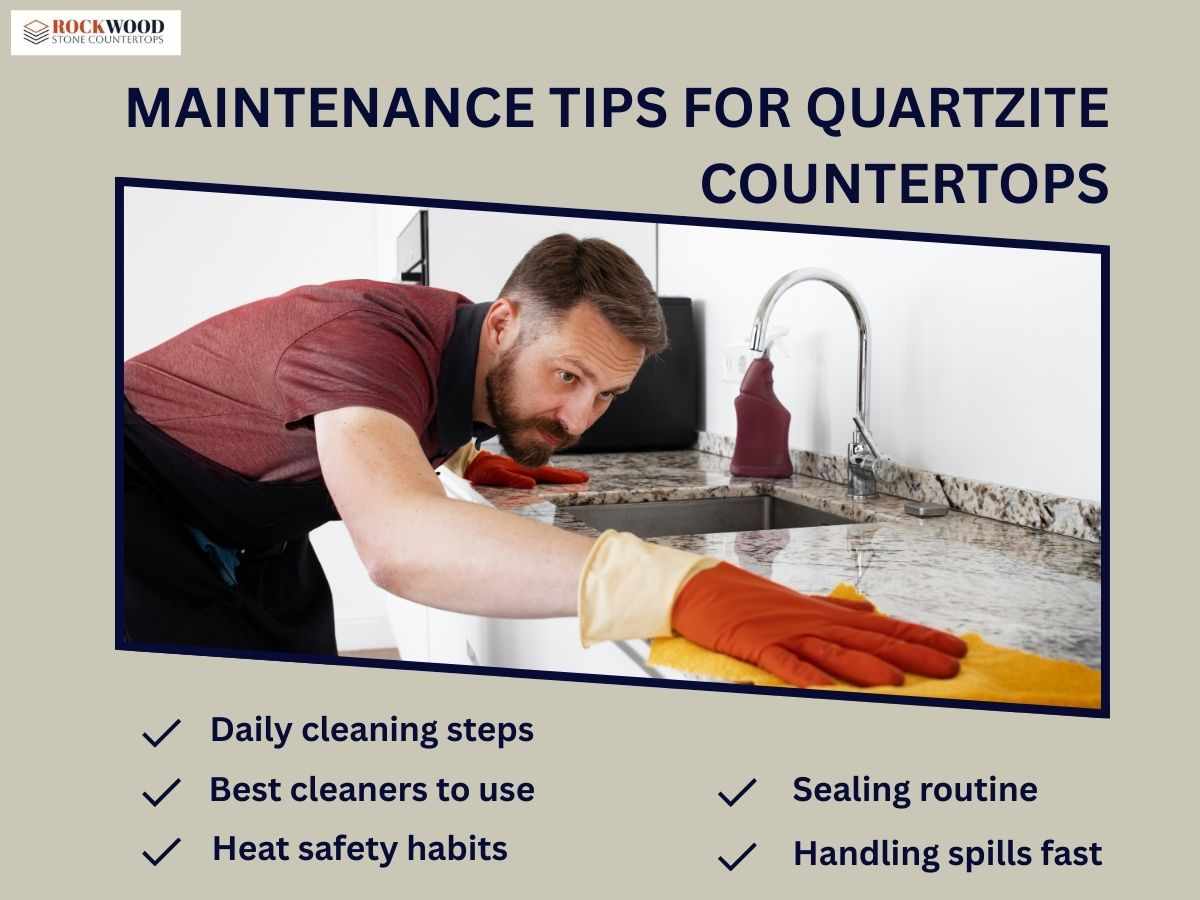
Plain dish soap and water. That's it.
Mix a few drops of mild dish soap in warm water. Wipe down your counters. Rinse with clean water. Dry with a soft cloth.
Boring? Sure. Effective? Absolutely.
For tougher messes:
Use cleaners specifically marked "stone-safe."
Check that pH is neutral (around 7)
Avoid anything with lemon, vinegar, or bleach
When in doubt, read the label
We keep telling clients this, and they look disappointed. They want some fancy solution. But the best maintenance is usually the simplest.
Mistake #2: Skipping the Sealing Schedule
Be honest: when's the last time you sealed your counters?
Can't remember? You're not alone. And you're probably overdue.
Most natural stone needs resealing every 6-12 months. Some dense granites can go 2-3 years. Marble and limestone? Every 3-6 months in high-use areas.
Here's the thing nobody tells you: that sealant isn't permanent. It breaks down from regular use, cleaning, heat, and just plain time.
Signs your stone needs sealing:
Water doesn't bead up anymore
Counters look dull or faded
Stains appear more easily
Surface feels rougher than before
The Water Test
Want to check if you need sealing? Try this.
Sprinkle water on your counter. Wait 15 minutes. If the water soaks in and darkens the stone, you need sealing. If it beads up, you're good for now.
Takes two minutes. Saves you hundreds in stain removal later.
We recommend setting a phone reminder twice a year. Spring and fall. Same time, you change your furnace filter. Make it a habit.
Mistake #3: Letting Spills Sit (Even for a Few Hours)
Coffee this morning. Red wine tonight. That tomato sauce from lunch.
You'll clean it up later, right?
Wrong. That's exactly how permanent stains happen.
Natural stone is porous. Even sealed stone has microscopic openings. The longer a spill sits, the deeper it penetrates.
According to research from Stone Care International, most permanent staining occurs within the first 4-8 hours of a spill. After that, removal becomes significantly harder and sometimes impossible.
The worst offenders:
Red wine
Coffee and tea
Citrus juices
Cooking oils
Tomato-based sauces
Colored sodas
We worked with a family in River Heights who left a pot of spaghetti sauce on their Carrara marble overnight. The stain went so deep we couldn't get it out without grinding and repolishing.
The 15-Minute Rule
Here's my rule: clean every spill within 15 minutes. Preferably sooner.
Blot (don't wipe) the spill. Use a clean, soft cloth. Work from outside toward the center. Then clean with your stone-safe soap and water.
Yes, it's annoying. Yes, it's worth it.
Mistake #4: Using Your Counters as a Cutting Board
We see this constantly. People are chopping directly on their beautiful stone counters.
"But it's stone! It's hard! It can take it!"
Sure, stone is hard. Your knife isn't going to damage it much. But here's what you're actually doing wrong.
Every time you cut on stone, you're creating microscopic scratches. These tiny grooves collect bacteria, trap stains, and make your counters harder to clean.
Plus, you're absolutely destroying your knives. Stone dulls blades faster than almost anything else.
What happens over time:
Surface develops a web of fine scratches
Counters look hazy or dull
Bacteria find hiding spots
Your expensive knives need constant sharpening
The Simple Fix
Use a cutting board. Every single time.
Keep one near your main prep area. Make it easy to grab. We like having 2-3 different sizes ready to go.
Bamboo boards are my favourite. They're gentle on knives, naturally antimicrobial, and dishwasher safe.
Your counters will thank you. Your knives will thank you. Your wallet will thank you when you're not buying new knife sets every year.
Mistake #5: Placing Hot Pots Directly on the Surface
This one surprises people.
"But we thought stone could handle heat!"
Sudden temperature changes cause thermal shock. The stone expands and contracts rapidly. Over time, this creates tiny stress fractures you can't see.
Then one day, you set down a hot pan and—crack. A split runs across your counter.
I've seen it happen more times than we can count. Usually with granite or marble. The crack appears instantly, ruins the look, and costs thousands to repair or replace.
The damage isn't always obvious:
Microcracks weaken the structure
Discoloration around heat exposure
Eventually leads to visible cracks
Voids warranties on most installations
Use Trivets and Hot Pads
Keep trivets near your stove. Use them every time.
Cork trivets work great. Silicone hot pads are fine too. Just create a barrier between the extreme heat and your stone.
This habit takes about two seconds and prevents catastrophic damage. Why risk it?
The Truth About Stone Maintenance
Here's what frustrates me: stone counters aren't actually high-maintenance. They just require consistent, correct maintenance.
Follow these five rules and your counters will outlast your mortgage. Ignore them, and you'll be dealing with damage, stains, and expensive repairs.
Most people think stone care is complicated. It's not. It's just different from laminate or solid surface counters.
The basics are simple:
Clean with mild soap
Seal on schedule
Wipe spills immediately
Use cutting boards
Protect from heat
That's it. Five habits that take almost no extra time.
The homeowners we work with who follow this routine? They never have problems. Their counters look pristine years later. They're happy they invested in stone.
The ones who wing it? They're calling us for stain removal, crack repairs, and eventually replacement.
Your Next Steps
Go check your counters right now from Rockwood Stone Countertops. Seriously, put down your phone and go look.
Do the water test. See if you need sealing. Check for any early damage from these mistakes.
Caught problems early? Great. Fix them now before they get worse.
Set those reminders for sealing. Buy a proper stone cleaner. Grab a few cutting boards and trivets.
Your future self will be grateful you did this today instead of putting it off.
Stone counters are an investment. Treat them right, and they'll look beautiful for decades. Treat them carelessly and you'll be replacing them in five years.
The choice is yours.
Frequently Asked Questions
Q: What should be the frequency of sealing my granite countertops?
The majority of granite requires resealing after every 12-18 months. It is sometimes 2-3 years by thick and heavy granites. Light-coloured or more permeable granite? Every 6-12 months. Do the water test to be sure.
Q: Could I apply Windex to my counters of stone?
No. Windex is made of ammonia that deteriorates stone sealant and may wear off as time goes by. It may work but you are damaging in the long run. Use stone-clean safe cleaners.
Q: How can we best take away oil spots on stone?
Baking soda and water (paste) form a poultice. Apply it thick over the stain. Cover with plastic wrap. Leave it for 24-48 hours. The oil will be brought out by the baking soda. May Stains should have several applications.
Q: Do you really mean that lemon juice will destroy my marble counters?
Yes, absolutely. Lemon juice is very acidic and it will cut marble, limestone and travertine in few seconds. It actually dissolves the calcium carbonate of the stone. Do not apply citrus on these materials.
Q: How do I know whether my counters are granite or marble, or quartz?
Add a drop of lemon juice in some inconspicuous place. when it fizzes, or etches, it is marble or limestone. In the event that nothing occurs, probably granite. Quartz (engineered stone) will not react to acid and its pattern is more uniform as well.






Write a comment ...